Aikido Terms and Elements
Aikido philosophy, techniques and weapons
DO 道
Kotodama: The Spiritual Power of Words in Japanese Culture and Aikido
March 10, 2023
Kotodama 言霊 is intertwined with the life and teachings of Aikido founder Morihei Ueshiba. Ueshiba was a deeply spiritual person who drew inspiration from Shinto 神道 religious and philosophical traditions. Kotodama is a fundamental aspect of Shinto, the indigenous religion of Japan, and has been integrated into various Japanese arts and customs, such as martial arts, traditional medicine, and music. Koto 言 means "word" and dama 霊 means "spirit." The term can be translated as "the spirit of words."
In Kotodama practice, it is believed that every word and sound vibration carries its own unique spiritual energy and power. One of the main principles of Kotodama is the belief that sound vibrations can directly influence the physical and spiritual world. Through resonance, sound waves can create vibrations that affect the flow of energy in the body and the surrounding environment. Different sounds and words are associated with specific spiritual energies and intentions.
In Kotodama practice, blessing words are called kotohogi 言祝 and curse words are called juso 呪詛. According to Kotodama belief, the spirits within these words can manifest them into reality after they are spoken. For this reason, practitioners avoid using inauspicious words, such as the number 4, which shares the same pronunciation "shi" as death 死. Instead, they prefer to use words with positive meanings. For example, instead of saying "I don't want to get sick," one might say "I want to be healthy." Kotodama practitioners believe that using negative words at inappropriate times can anger the spirits of words and invite punishment from them.
It is also believed that a person's name carries special power, as it holds their spirit. If someone knows another person's true name, they can easily manipulate or influence them through Kotodama. For this reason, some elderly Japanese people have two names: one is their true name, known only to themselves and their parents, while the other is a false name for everyday use. In ancient times, a maiden could not casually reveal her true name to others, because a man asking for her true name would imply a marriage proposal.
Ueshiba believed that Kotodama is a key aspect of Aikido practice and that it is essential for creating a deep connection with one's inner energy and the energy of the universe. Some words used in Aikido Kotodama practice are AI-KI-DO, SU-YU-MU, and AOUEI. These words are recited during meditation or movement. Perhaps due to its religious origins and complexity, Kotodama is no longer a common practice in Aikido today.
Musubi – The Square, Triangle, and Circle in Aikido
March 8, 2023
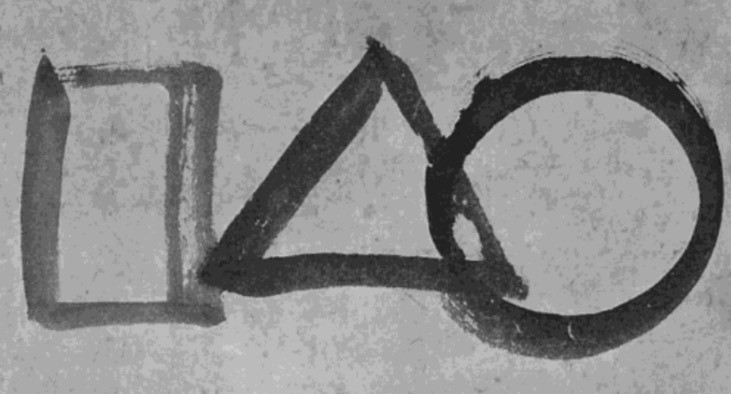
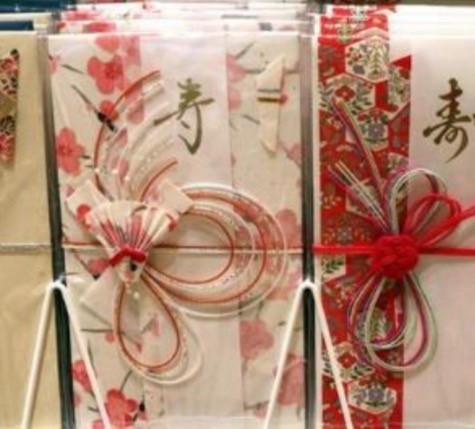
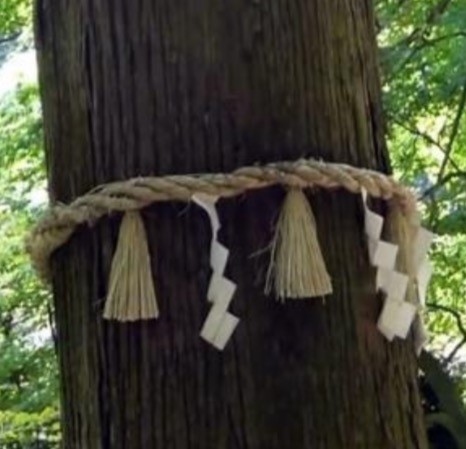
Aikido founder Morihei Ueshiba used the symbols of a square, triangle, and circle to describe Aikido philosophy. These symbols represent the concept of Musubi 結び, a term from Japanese Shinto 神道 that describes the force or energy that brings different people or things together. Each Musubi symbol has special meaning and is often associated with Kami 神 (divinity). Tamatsume Musubi represents the Kami of completion and stability, Iku Musubi represents the Kami of life and is associated with the continuous cycle of birth, death, and rebirth, and Taru Musubi represents the Kami of abundance.
In Shinto rituals, Musubi is often represented by tying Shimenawa 標縄 (sacred ropes) around trees, stones, and other objects to show their connection to Kami. This is also symbolized by tying a ceremonial knot known as Mizuhiki 水引, which is typically used in Japanese culture to represent unity and harmony. The concept of Musubi emphasizes the interconnectedness of all things in the universe.
Ueshiba was a devoted follower of Shinto and his Aikido is heavily influenced by Shinto concepts. One of his famous quotes is: "The body should be triangular, the mind circular. The triangle symbolizes the generation of energy and is the most stable physical position. The circle symbolizes calmness and perfection, the source of unlimited techniques. The square symbolizes firmness, the foundation of applied control."
Here are some quotes about the symbols from Ueshiba's book "The Art of Peace":
"The square is a symbol of stability and strong foundation. It represents the earth, which is firm, steady, and reliable. Therefore, we use a square stance in Aikido to ensure a strong foundation for our movement. But we must remember that the square is not complete without the circle. It is the circle that gives the square life and movement, just as our spirit gives life and movement to our techniques."
"The circle symbolizes the spirit of harmony, the triangle symbolizes the spirit of progress, and the square symbolizes the spirit of firmness."
"The triangle marks points where the spiritual, mental, and physical sides meet and the energy that arises when these three points are connected. The circle represents the infinite possibilities of unity and harmony, and the square represents the solid foundation of physical power."
WAZA 技
Randori – The Art of "Grasping Control in Chaos"
March 8, 2023
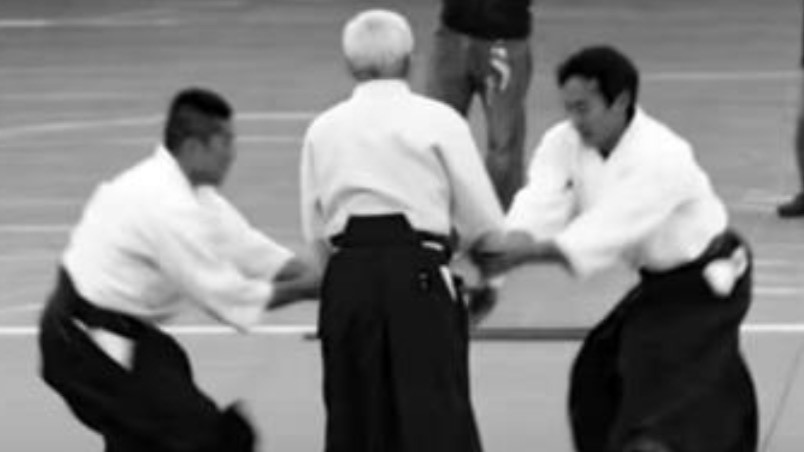
Randori 乱取り is a training method practiced in many Japanese martial arts, including Aikido. The first character, 乱, means "disturbance" or "chaos," and 取り means "taking" or "grasping." Together, the term Randori can be interpreted as "grasping control in chaos."
Randori is training in which a practitioner stands in a dynamic and unpredictable environment facing multiple attackers. This differs from pre-arranged sequences of attack and defense techniques, such as kumite 組手 in karate or kumijo 組杖 in Aikido, which are typically performed for demonstration purposes. Randori can be further divided into hitori gake 一人掛け (one person attack), futari gake 二人掛け (two person attack), sannin gake 三人掛け (three person attack), or simply taninzu gake 多人数掛け (multiple person attack), depending on the practitioner's skill level.
Randori is challenging because it requires the defender to be aware of multiple attackers and respond to them quickly. It is typically practiced by more advanced practitioners and helps develop their ability to adapt and respond effectively to different attack scenarios. It also helps improve their situational awareness and decision-making skills, as well as their timing, coordination, and tactical skills in a realistic simulation of a real attack scenario where there may be multiple attackers.
In Aikido, Randori is typically presented in tachi waza 立ち技 (standing techniques), but it can also be performed in suwari waza 座り技 (sitting techniques) or even more rarely with armed attackers. Although Aikido generally does not involve competition, in Aikido Tomiki style, known as Shodokan 昭道館 Aikido, there is Randori competition where two practitioners face each other. Competitions are held in the form of tanto randori 短刀乱取 or toshu randori 徒手乱取 (empty-hand Randori).
In summary, Randori is an important part of Aikido training both mentally and physically. Although the format and rules of Randori may vary depending on the style, it is an essential part of Aikido training and helps practitioners prepare for self-defense situations.
WEAPON 剣杖
Bokuto or Bokken: The Difference Between "To" and "Ken" and Their Historical Significance in Japanese Martial Arts
March 12, 2023
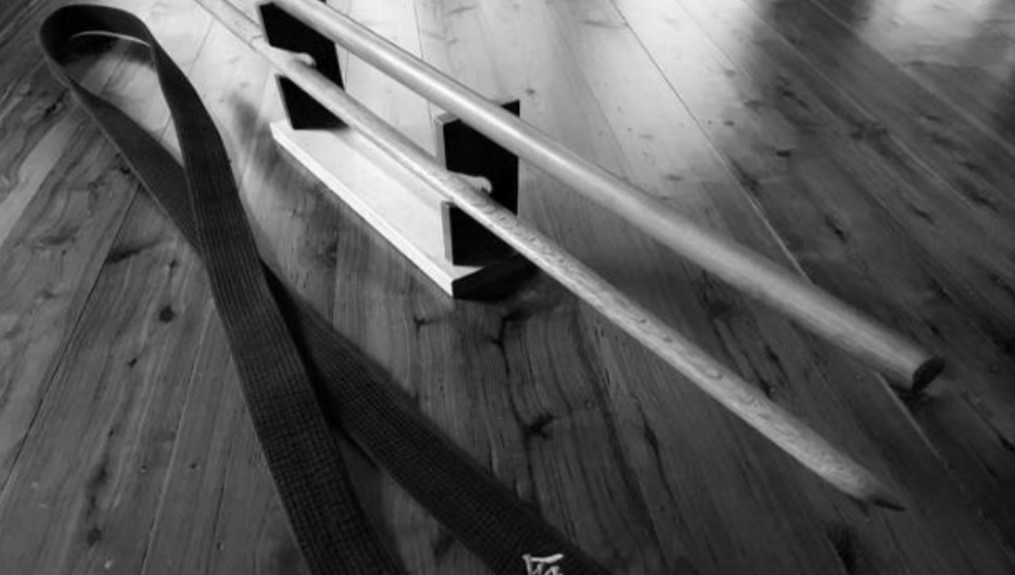
Bokuto 木刀 and bokken 木剣 are often used interchangeably (both are translated as "wooden sword"). However, "To" 刀 and "Ken" 剣 are different. First, these two kanji characters are not Japanese words by origin, but came from China. Therefore, the difference between them is better understood from a Chinese perspective. 刀 is a single-bladed weapon with a blade on only one side, used primarily for slashing and often has a curved shape. On the other hand, 剣 is a straight, double-bladed weapon with edges on both sides and is used primarily for stabbing.
Historically, the use of 刀剣 (as a complete term) in China can be associated with the Bronze Age, when it became possible to melt metal. Initially, both 刀 and 剣 were straight swords, and 刀 later evolved into a curved shape. As time passed, 刀剣, especially 刀, evolved into various sizes and shapes. In ancient China, the higher classes typically carried 剣 to demonstrate their position. 剣 was called the gentleman of all weapons.
As a weapon, 刀 has long been mainstream, and in Japan there is an ideology that values it as a precious object. Samurai carried various 刀 instead of 剣, from the longer tachi 太刀 and uchigatana 打刀 to the shorter wakizashi 脇差 and kodachi 小太刀, and the shortest tantō 短刀. On the other hand, 剣 has been revered in the Japanese spiritual and religious world from the beginning. One example is the Kusanagi no Tsurugi 草薙劍, one of Japan's three sacred treasures 三種の神器.
In Japan, the use of wooden swords may have originated in the Muromachi period 室町時代 (1336–1573). During this time, the use of real swords in training was considered too dangerous, so wooden swords were created as a safer alternative. They were used to develop sword mastery techniques, speed, and precision, as well as to reduce the risk of injury during training.
Today, the Japanese sword that most people refer to is called a katana, which is also a type of 刀. The Bokken used in Aikido, which mimics the katana, should technically be called a bokuto. However, in modern martial arts, such as Aikido and Kendo, the purpose of practicing with wooden swords is no longer simply to acquire the skill of slashing people with a sword. In addition to physical and mental strength, the practice focuses more on character development and self-improvement.
Article based on:
aikidodiscovery.net